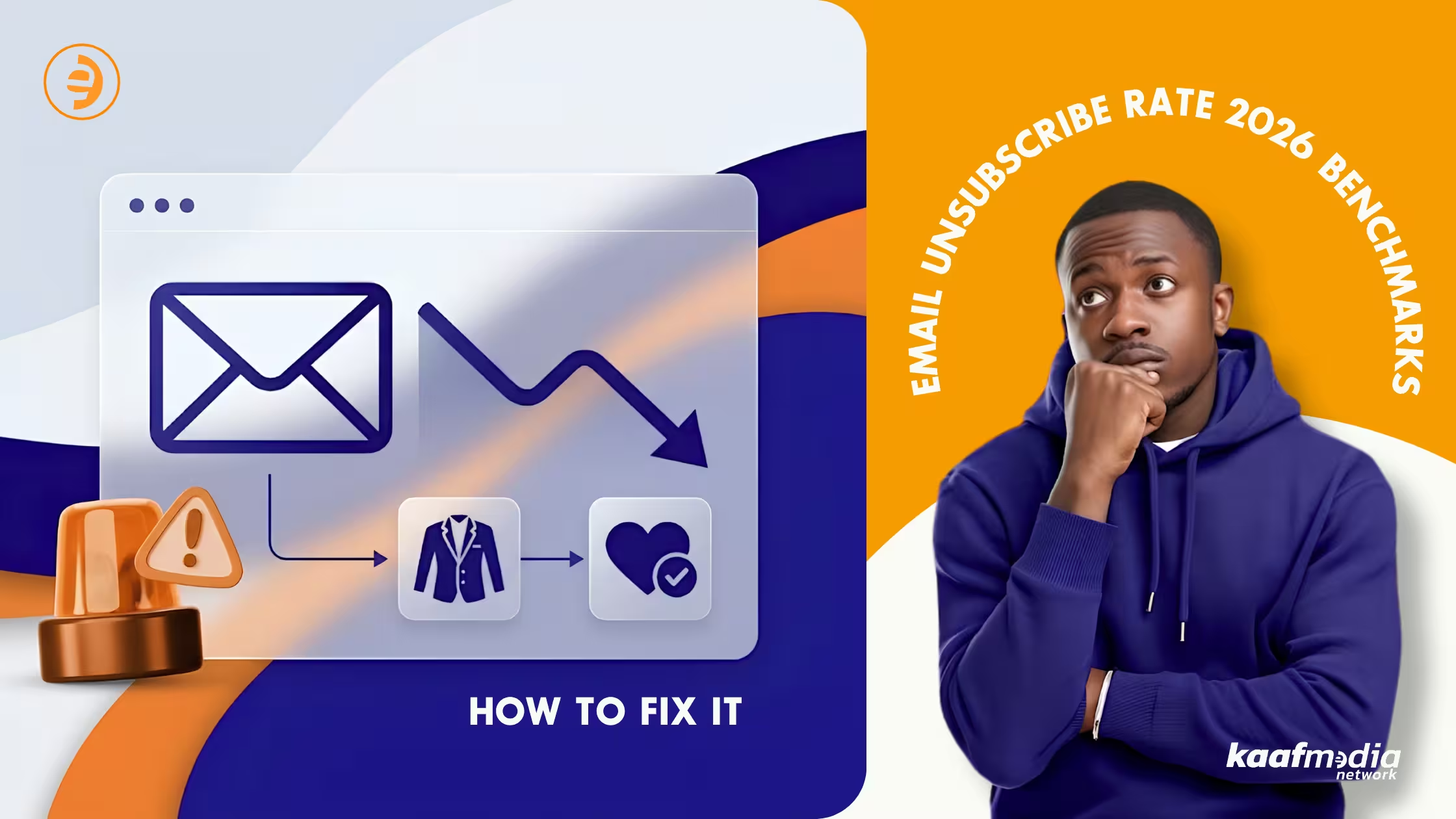
Your email unsubscribe rate says more about your list health than almost any other number in your dashboard. It shows exactly when subscribers stop finding value in what you send. A rate that creeps up week over week is not just a vanity metric problem. It can quietly damage your sender reputation and pull your open rates down before you notice it. This guide covers what counts as a good unsubscribe rate, how to calculate it, and the fixes that actually move the number, including a few angles retail and fashion brands rarely see covered.
Quick Summary (2-min read):
A healthy email unsubscribe rate sits under 0.5% per campaign, with most retail and ecommerce brands landing between 0.2% and 0.4%. The rate matters beyond list size because a rising trend often shows up before spam complaints do, giving you an early warning on deliverability. This guide covers the formula, current 2026 benchmarks, and the tactics our team uses to bring a client’s rate back down, plus why retail and fashion sends behave differently.
- What counts as a good unsubscribe rate right now
- The exact formula, with a worked example
- How unsubscribe rate connects to spam complaints and deliverability
- Five tactics that lower unsubscribe rate without cutting send volume
- Why retail and fashion lists see higher rates, and what to do about it
- How to reduce unsubscribes without simply sending less, and what email list churn actually means
What is email marketing
Email marketing is the practice of sending planned, permission-based messages to a list of subscribers to build a relationship, promote products, or share updates. It covers everything from a single promotional email to an automated welcome series that runs for months without anyone touching it.
The channel works because the subscriber already opted in. That decision makes it more direct than social reach or paid ads, since you are not competing with an algorithm to reach the inbox. At its core, marketing by email means sending a message someone chose to receive, at a time and frequency that respects that choice.
What is unsubscribe rate in email marketing
Unsubscribe rate is the percentage of recipients who opt out of your list after a single send. It is calculated per campaign, not cumulatively, so a spike after one email points to something specific in that message, not a problem with your whole program.
Unsubscribe rate formula (how to calculate it)
The formula is simple.
Unsubscribe Rate = (Total Unsubscribes ÷ Total Emails Delivered) × 100
Say you send a campaign to 10,000 subscribers and 480 bounce. That leaves 9,520 delivered emails. If 38 people unsubscribe, your rate is 38 ÷ 9,520 × 100, or about 0.4%. Always divide by delivered emails, not the number you originally sent. Bounced emails never reached anyone, so they should not count against your rate.
What is a good unsubscribe rate for email marketing
Most senders land between 0.1% and 0.5% per campaign, and multiple 2026 benchmark reports treat anything under 0.5% as healthy, with rates above that level signaling that your emails are not meeting subscriber expectations or that you are sending too often. Brevo’s 2026 marketing benchmark report, built from billions of sends across its platform, puts the overall average at 0.46%, with top performers holding under 0.05%. That gives you a real ceiling to aim under, not a number to chase toward zero.
| Industry | Typical Unsubscribe Rate |
|---|---|
| Retail and Ecommerce | 0.2% – 0.4% |
| SaaS and B2B Services | 0.1% – 0.3% |
| Nonprofits | 0.15% – 0.3% |
| Media and Publishing | 0.2% – 0.45% |
Treat these ranges as directional. Actual rates shift with list size, send frequency, and how aggressively a brand acquires new subscribers, so a small SaaS newsletter and a high-volume retail list will not sit at the same point in that range even in a healthy month.
Why unsubscribe rate matters more than you think
A rising unsubscribe rate rarely shows up alone. It is usually the first visible symptom of a problem that would otherwise stay hidden until your emails start landing in spam folders.
The hidden link between unsubscribe rate and spam complaints
Unsubscribing is the polite exit. Marking an email as spam is the version mailbox providers actually penalize you for. When unsubscribing is easy to find, disengaged subscribers take that route instead of hitting the spam button, which protects your sender reputation. Hide the unsubscribe link, or bury it in tiny text at the bottom of the email, and you push people toward the spam button instead.
Google’s one-click unsubscribe rule for bulk senders took effect in 2024, turning an easy opt-out from a nice-to-have into a baseline requirement for reaching the inbox at all. Google’s own sender guidelines require it on any commercial or promotional message once a sender crosses 5,000 messages a day to personal Gmail accounts.
A pattern our team watches for with retail clients is a sudden jump in unsubscribe rate on one send that shows up alongside a small rise in spam complaints the following week. Treating unsubscribe rate as an early warning system, rather than a metric to minimize at all costs, keeps you ahead of a deliverability problem instead of reacting to one.
A healthy unsubscribe rate is not a failure. It is the metric protecting you from a much worse one, the spam complaint.
How the right email marketing solution helps you control unsubscribe rate
Your unsubscribe rate is only as good as the platform sending your campaigns. The right email marketing solution gives you the segmentation, send-time controls, and preference center tools that keep unsubscribe rate low without slowing your program down.
Features to look for in an email marketing solution
- Built-in segmentation by purchase history, engagement, and signup source
- A preference center subscribers can reach from every email
- Send-time optimization so campaigns land when a subscriber is actually active
- Native A/B testing for subject lines and send frequency
- Deliverability reporting that flags rising complaint or bounce trends early
Most email marketing softwares on the market cover the basics. Where they differ is how much control they give you over frequency and content at the individual subscriber level, which is what keeps a list engaged long enough to convert. If you are still comparing platforms, our approach to email marketing walks through how we set up that level of control for clients from day one.
How to reduce unsubscribes in your marketing campaigns
Lowering your unsubscribe rate rarely takes a full rebuild. Most of the time it comes down to five habits.
- Segment your list before you send. Send the same offer to your whole list and you will get unsubscribes from people it was never meant for. Segment by purchase history, engagement level, or signup source so each message actually applies to the person reading it.
- Personalize every campaign. Personalization goes past a first name in the subject line. Use past purchases, browsing behavior, or stated preferences to shape what each segment receives.
- Get send frequency right. Too many emails is the single most common reason people leave a list. Test frequency the same way you would test a subject line, and let the preference center absorb people who want less instead of losing them entirely.
- Ask for feedback before they leave. Add a one-question survey to your unsubscribe page. “What made you leave?” with three or four options gives you a direct read on what to fix, and some subscribers reconsider once they see there is a choice besides leaving entirely.
- Clean your list regularly. Remove subscribers who have not opened an email in six months or more. A smaller, engaged list produces a lower unsubscribe rate and a better sender reputation than a large one full of people who tuned out months ago.
How to reduce unsubscribes without simply sending less
Cutting volume is the blunt option. Most lists improve when you keep the same send cadence but change what each subscriber actually receives.
- Expand the preference center so people can choose content types (promos only, new arrivals, editorial) and frequency instead of leaving completely.
- Suppress recent non-openers from the next promotional blast while still keeping them on educational or restock flows.
- Use engagement-based or send-time optimization so the same campaign lands when the individual subscriber is most likely to open.
- Run a short win-back sequence for people showing fatigue signals before they hit the unsubscribe link.
These steps keep total volume stable while removing the messages that trigger the opt-out. We use the same approach inside longer retention programs covered in our email marketing for ecommerce guide.
What email list churn means and how it differs from unsubscribe rate
Unsubscribe rate measures one campaign. Email list churn measures the longer trend: the percentage of the list that becomes inactive or leaves over a month or quarter. A healthy single-send rate can still hide rising churn if the same people keep opting out across multiple sends.
Track both. Campaign-level unsubscribe rate tells you which message caused the problem. List churn tells you whether the overall program is losing relevance. When both rise together, the issue is usually frequency, targeting, or offer quality rather than one bad subject line.
Retail email marketing and why unsubscribe rates run higher
Retail email marketing carries a structural disadvantage. Promotional volume is higher, sale cycles compress sends into short bursts, and holiday calendars push frequency up right when subscriber patience is thinnest. That is part of why retail and ecommerce benchmarks sit slightly above some other categories even at a healthy baseline.
Common retail email mistakes that trigger unsubscribes
- Sending a daily promo during a sale period without checking fatigue signals
- Using the same subject line format for every campaign until it stops standing out
- Skipping purchase-category segmentation, so a men’s apparel buyer keeps getting women’s collection emails
- Skipping a win-back flow for lapsed buyers before they hit unsubscribe
Our team has seen a boutique client cut its unsubscribe rate by roughly a third simply by adding purchase-based segmentation before a seasonal sale. We cover more of that approach in our piece on email marketing for online boutiques.
Retail lists do not need fewer emails, they need better-targeted ones.
Fashion ecommerce marketing keeping subscribers engaged
Fashion ecommerce marketing has its own version of the same problem. New collections drop fast, and the temptation to email every drop to the full list is strong. That is usually the fastest way to inflate the unsubscribe rate in this category.
Fashion email templates that reduce fatigue
- A lookbook template for new arrivals, sent only to subscribers who engaged with the last three sends
- A restock template limited to people who browsed that specific item
- A style guide template that mixes editorial content with product, so every email is not a hard sell
- A loyalty tier template reserved for repeat buyers, kept separate from general list sends

A lookbook-style email leads with editorial photography and tagged products side by side, so engaged subscribers see new arrivals without every send reading like a discount blast.
Templates built around a subscriber’s actual behavior, instead of a single list-wide send, keep the fashion vertical’s naturally higher volume from turning into a higher unsubscribe rate.
How to track and monitor unsubscribe rate over time
Track unsubscribe rate per campaign first, then roll it into a monthly trend line. A single bad send matters less than a rate that climbs for three sends in a row. We look at this the same way we approach benchmarking performance metrics across industries, a single number means little without the trend behind it.
Most platforms surface this number automatically, but pair it with open rate, click rate, and spam complaint rate in the same dashboard. The unsubscribe rate on its own tells you people are leaving. Looking at it alongside the other three tells you why.
Also break the number down by mailing list or segment when the platform allows it. A spike concentrated in one list (for example, a promotional list versus a loyalty list) points to a targeting or offer problem rather than a global frequency issue. Watching unsubscribe count by list over several weeks is the fastest way to diagnose whether the rise is coming from frequency, targeting, or the offer itself.
Common mistakes brands make with unsubscribe rate
- Treating every unsubscribe as a loss instead of list hygiene doing its job
- Reacting to one bad send by pausing the whole program instead of adjusting one variable
- Ignoring the preference center and offering only a full opt-out
- Never asking why people leave, so the same mistake repeats next quarter
Frequently asked questions
What is a good unsubscribe rate for email marketing?
Most benchmarks put a healthy rate under 0.5% per campaign, with retail and ecommerce brands typically landing between 0.2% and 0.4%.
How do you calculate the unsubscribe rate?
Divide total unsubscribes by total emails delivered, then multiply by 100. Always use delivered emails, not the number originally sent, since bounces never reached anyone.
How can I reduce unsubscribes in my marketing campaigns?
Segment before you send, personalize based on behavior, get frequency right, ask for feedback on the unsubscribe page, and clean your list regularly.
Does a high unsubscribe rate hurt email deliverability?
Not directly, but it often signals the same problems that lead to spam complaints, which do hurt deliverability. A rising trend is worth investigating before it turns into a complaint problem.
How do I reduce unsubscribes without simply sending less?
Use a preference center, suppress non-openers from promo blasts, apply engagement-based send times, and run short win-back flows. These keep volume steady while removing the messages that trigger opt-outs.
What is email list churn and how is it different from unsubscribe rate?
Unsubscribe rate is measured per campaign. List churn measures the longer-term percentage of the list that becomes inactive or leaves over weeks or months. Rising churn alongside a normal campaign rate usually points to a broader relevance problem.
How do I track unsubscribe trends and identify the cause?
Watch the rate across three or more consecutive sends, then break it down by list or segment. Pair it with open, click, and spam-complaint rates. A spike limited to one list usually means targeting or offer issues rather than overall frequency.
What is a healthy or normal unsubscribe rate in 2026?
Under 0.5% per campaign is treated as healthy across most benchmark reports. Retail and ecommerce typically sit between 0.2% and 0.4%. Top performers stay under 0.05%.
Can AI help reduce email unsubscribe rates?
Yes, mainly through better segmentation, send-time optimization, and subject-line testing. AI does not replace list hygiene or preference centers, but it can surface fatigue signals earlier and personalize content at scale.
Final thoughts
Unsubscribe rate is not a number to chase toward zero. It is a signal, and a fairly honest one, about whether your emails still match what subscribers expected when they signed up. Watch the trend, not just the single-campaign number, and use the tactics above before a slow climb turns into a deliverability problem. Keeping volume while improving relevance is almost always more effective than simply sending less.