U.S. ecommerce sales reached an estimated $340.2 billion in the second quarter of 2026, accounting for 17.1% of total retail sales. For ecommerce brands, the challenge is no longer simply getting people to visit a store. It is getting the right customers to come back, buy again, and stay connected to the brand. U.S. Census Bureau data
Email marketing for ecommerce gives brands a way to do that without relying on a new ad impression every time they want to sell. But the strongest programs are not built from random newsletters and discount blasts. They are built around customer behavior, product demand, lifecycle stages, and measurable business goals.
For a small store, that might mean getting the basics right. For an established ecommerce business, it means managing a complete system of campaigns, automated flows, segmentation, deliverability, and retail and ecommerce marketing.
Quick Summary:
Effective ecommerce email marketing connects customer data, automated journeys, and promotional campaigns into one system. The most useful approach is to build around the customer lifecycle, then improve the system with segmentation, testing, deliverability controls, and revenue-focused measurement.
- Build your email program around the customer lifecycle, not isolated campaigns.
- Prioritize high-intent automated flows before adding more broadcasts.
- Use behavioral and purchase data to make segmentation useful.
- Measure revenue and repeat purchases alongside clicks and conversions.
- Control frequency, deliverability, and automation overlap as your list grows.
What Is Email Marketing for Ecommerce?
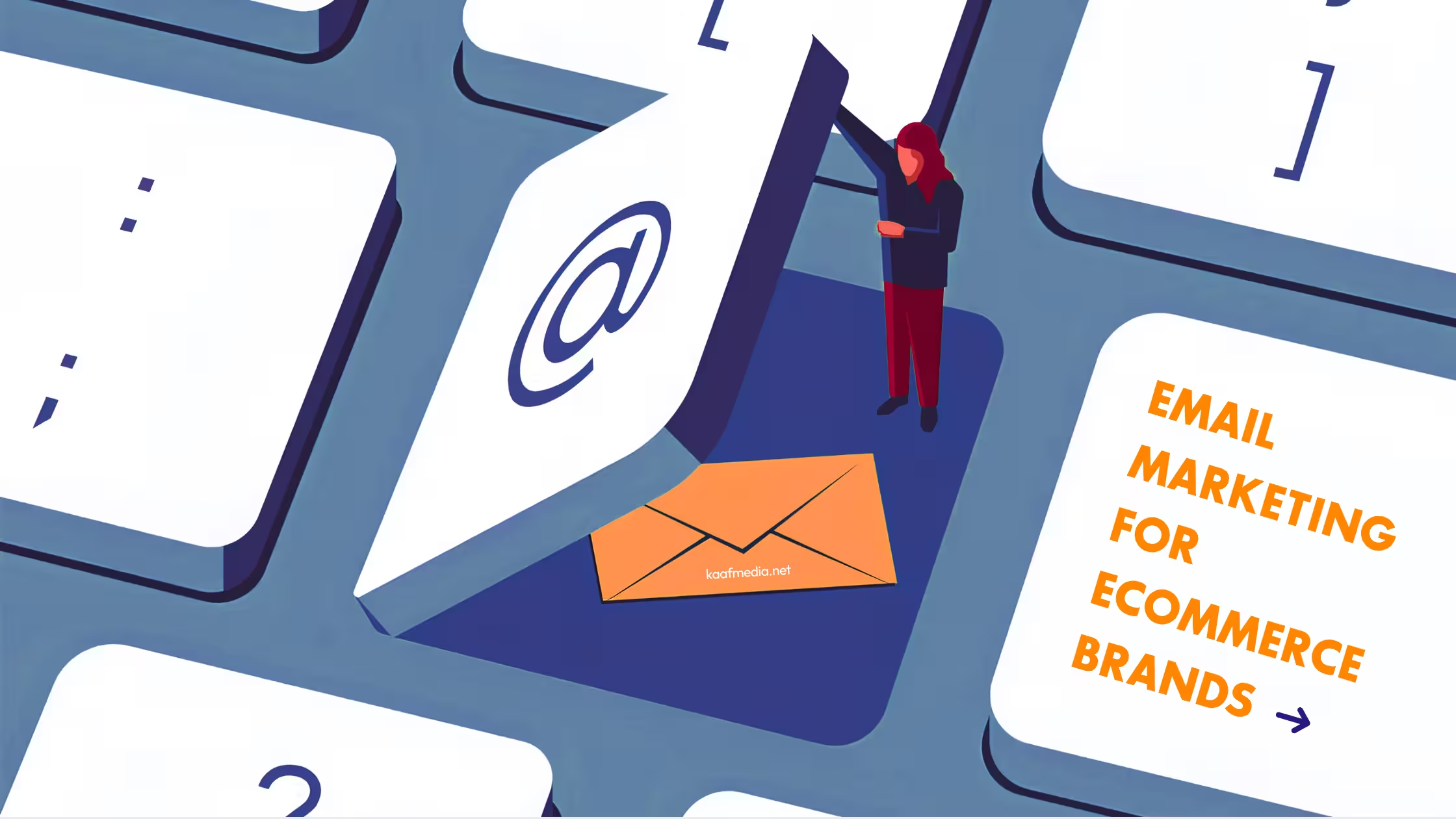
Email marketing for ecommerce is the use of email to acquire subscribers, encourage purchases, support customers after a sale, and increase retention through targeted communications.
Unlike a general newsletter program, ecommerce email marketing is closely connected to the store itself. Product views, cart activity, orders, customer value, category preferences, subscription status, and previous engagement can all influence which message a shopper receives.
There are two broad sides to an ecommerce email program.
| Type | How it works | Common examples |
|---|---|---|
| Campaigns | Planned and sent to a selected audience at a specific time. | Product launches, promotions, seasonal sales, newsletters |
| Automated flows | Triggered by customer behavior or a defined event. | Welcome, cart recovery, post-purchase, win-back |
Established stores usually need both. Campaigns create timely reasons to buy, while automated flows respond to what individual shoppers are already doing.
The difference matters because relevance changes the job of the email. A blanket promotion asks, “Are you interested in this?” A behavior-based message can ask, “Are you still interested in the product you looked at yesterday?”
Campaigns and automations should work together
A common mistake is to treat campaigns and automated emails as separate systems.
Imagine a customer receives a welcome email, adds a product to their cart, enters an abandoned cart flow, and then receives a sitewide 20% off campaign five minutes later. Every individual message might be well designed, yet the overall experience is poorly coordinated.
At scale, ecommerce email marketing is partly a messaging problem and partly a systems problem. Your team needs rules that determine which message takes priority when several customer conditions are true.
Why Email Marketing Matters for Established Ecommerce Stores
Email becomes more valuable as an ecommerce business builds a larger base of subscribers, customers, and behavioral data because the channel can support multiple stages of the customer relationship.
It supports repeat purchases
Acquiring a customer through paid search, paid social, affiliates, or other channels is only the first transaction. Email gives the brand a direct way to continue the customer relationship after a purchase.
Post-purchase education, product recommendations, replenishment reminders, loyalty offers, and win-back campaigns can all create additional buying opportunities without requiring the customer to rediscover the brand through an ad.
It gives you more ways to use customer data
An ecommerce store can know far more about a customer than their email address. With the right consent and tracking setup, the marketing system may also know what categories they browse, what products they buy, how recently they purchased, how frequently they buy, and how engaged they are with email.
The value comes from turning those signals into useful decisions rather than collecting data simply because the platform allows it.
It can reduce dependence on one acquisition channel
Paid advertising can create new demand, but the economics of acquisition can change quickly. Email can help capture more value from customers you already paid to acquire.
This does not mean email replaces acquisition marketing. A healthy ecommerce program connects acquisition and retention. Ads can bring new shoppers into the store, while email can help turn more of those shoppers into repeat customers.
It gives established stores a retention channel
For mature ecommerce businesses, retention often deserves as much attention as acquisition. A customer who has already trusted the brand has different needs from someone seeing it for the first time.
Email lets you create separate experiences for those customers instead of sending the same message to everyone.
The goal is not to send more email. The goal is to make every send more relevant to the customer receiving it.
8 Types of Ecommerce Emails Every Store Should Understand
Most established ecommerce brands need a mix of lifecycle, behavioral, transactional, and promotional emails, but each one should have a clear job.
1. Welcome emails
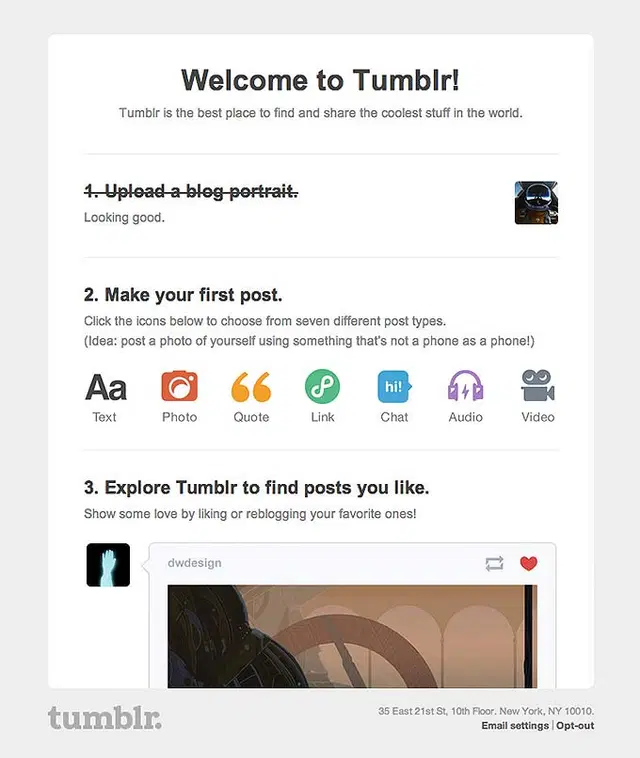
A welcome series introduces your brand to a new subscriber while interest is fresh. Instead of making the entire sequence a discount offer, use it to explain the brand, set expectations, highlight popular products, and give the subscriber a useful reason to keep opening future emails.
A stronger welcome sequence can also begin segmenting customers. Someone who clicks on men’s footwear should not necessarily receive the same future messages as someone who repeatedly views skincare products.
2. Abandoned cart emails
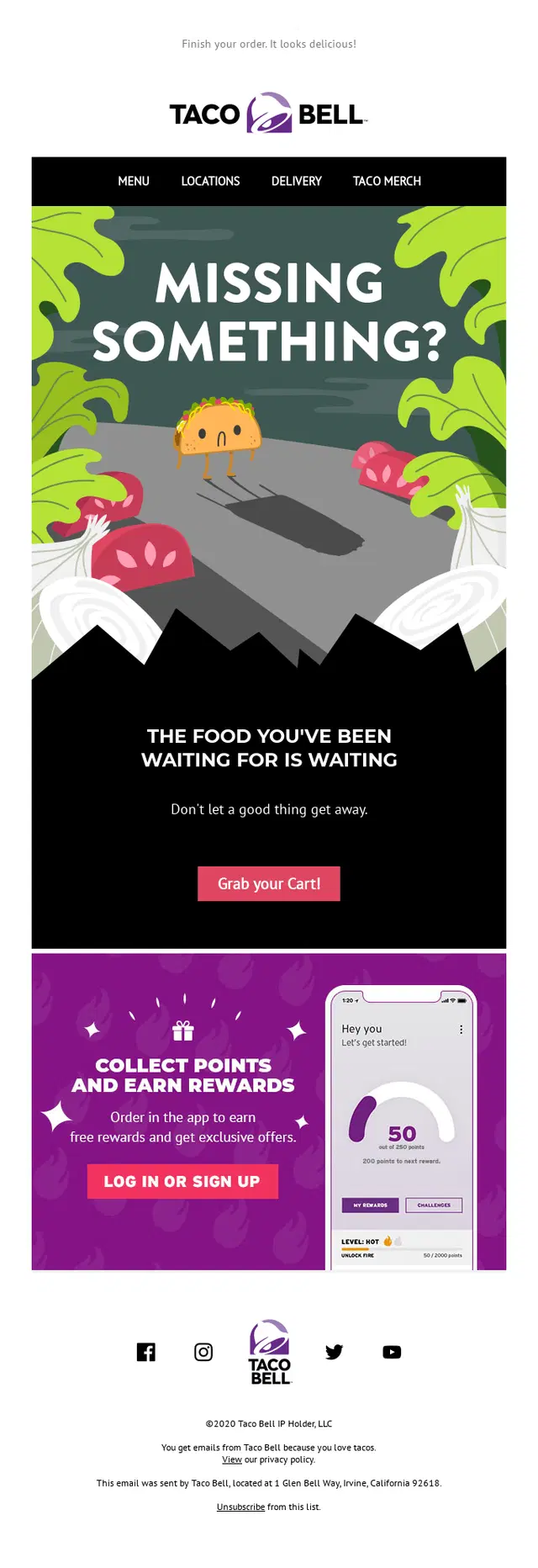
Cart recovery emails target shoppers who added products to their cart but did not complete the purchase.
The best sequence does more than repeat the product name. It can remind the customer what they selected, answer a potential objection, mention relevant shipping or return information, and create urgency only when that urgency is genuine.
Discounting should not be the automatic second step. If customers learn that abandoning a cart always produces a coupon, some may delay purchases intentionally.
3. Browse abandonment emails
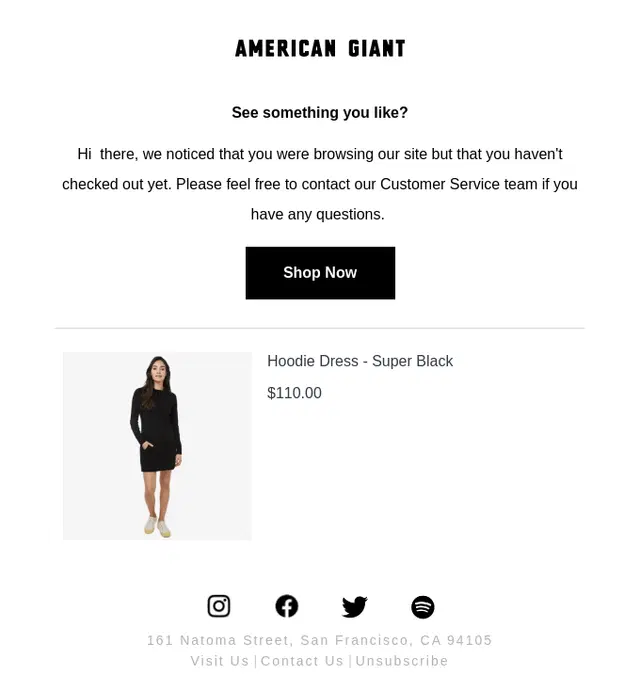
Browse abandonment targets shoppers who viewed products without adding them to a cart. It can be useful for stores with strong product discovery behavior, especially when the shopper has shown meaningful interest in a particular product or category.
Because browsing intent is weaker than cart intent, the message should usually be less aggressive. Product education, related products, social proof, or a reminder of the value proposition can work better than an immediate discount.
4. Post-purchase emails
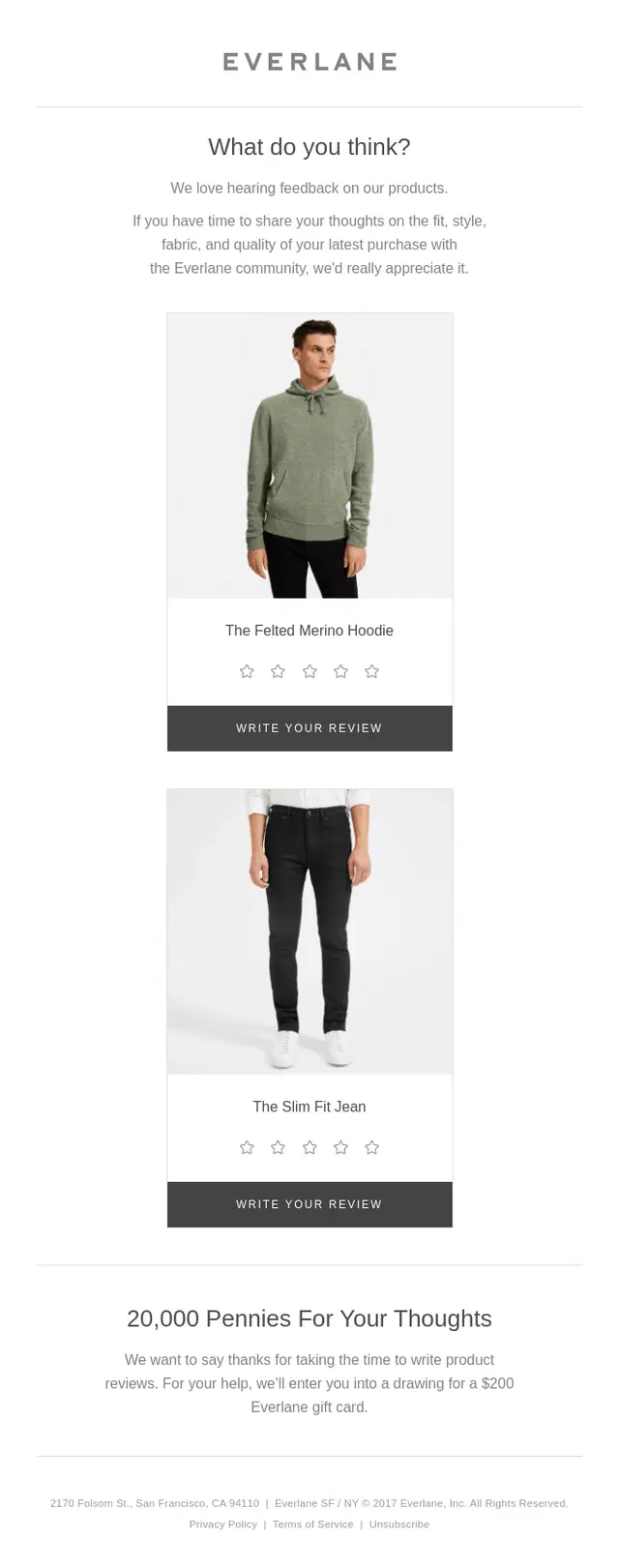
The customer relationship does not end at checkout.
Post-purchase messages can confirm the order, explain what happens next, help customers get more value from the product, and prepare the ground for a future purchase.
For example, a fitness equipment brand might send setup guidance first, care instructions later, and complementary product suggestions after the customer has had time to use the original product.
5. Product recommendation emails
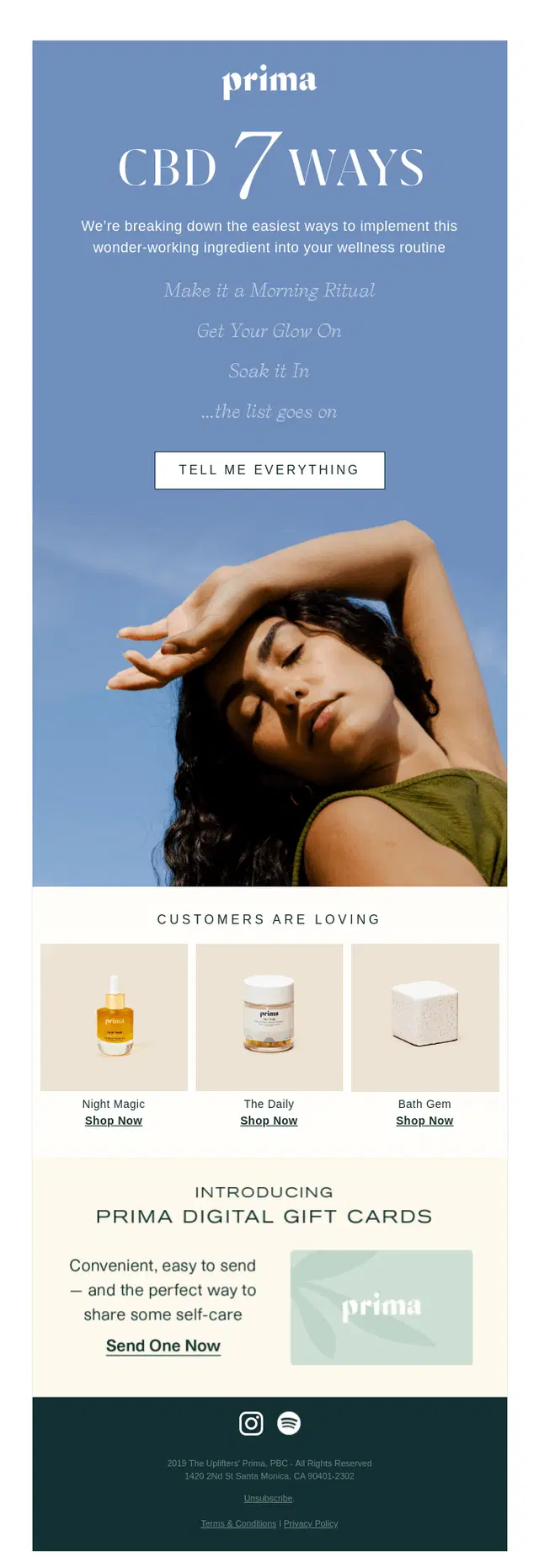
Recommendation emails use customer behavior or purchase data to surface products that are relevant to an individual shopper.
Recommendations work best when they have a logical connection to the customer’s interests. A recent purchase, viewed category, purchase frequency, or complementary product relationship can be more useful than simply showing the site’s top sellers.
6. Replenishment emails
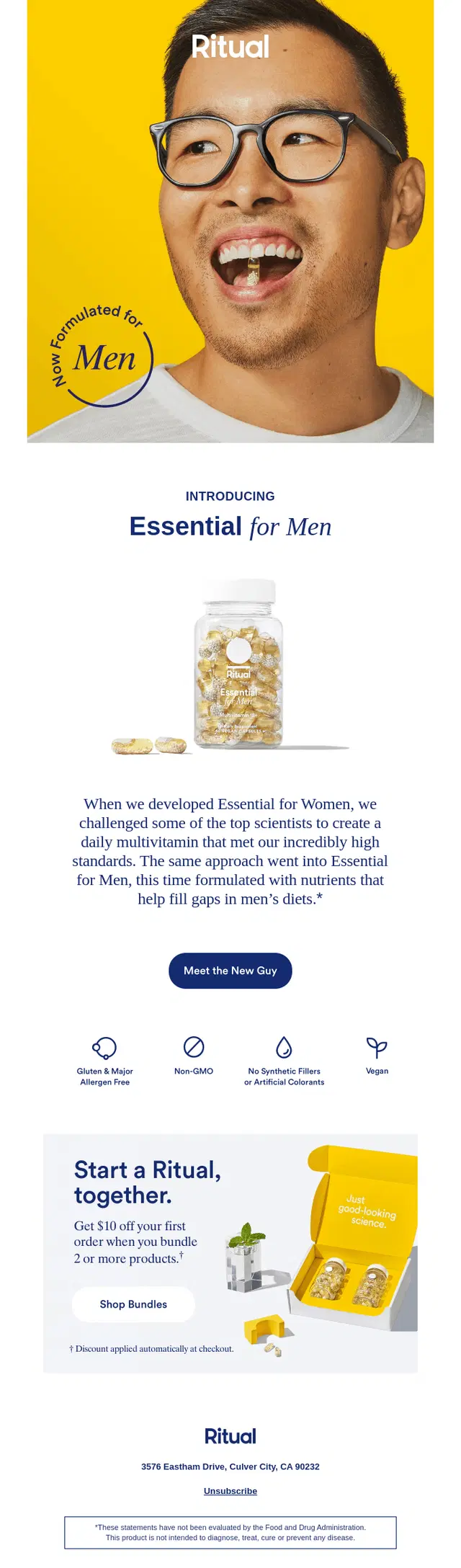
Replenishment emails remind customers when they may be ready to reorder a product they use repeatedly.
This is particularly useful for consumables such as skincare, coffee, supplements, pet supplies, household products, and other repeat-purchase categories.
The timing should be based on observed buying patterns when enough purchase history exists. A reminder that arrives too early can be ignored. One that arrives too late can lose the sale to another retailer.
7. Win-back emails
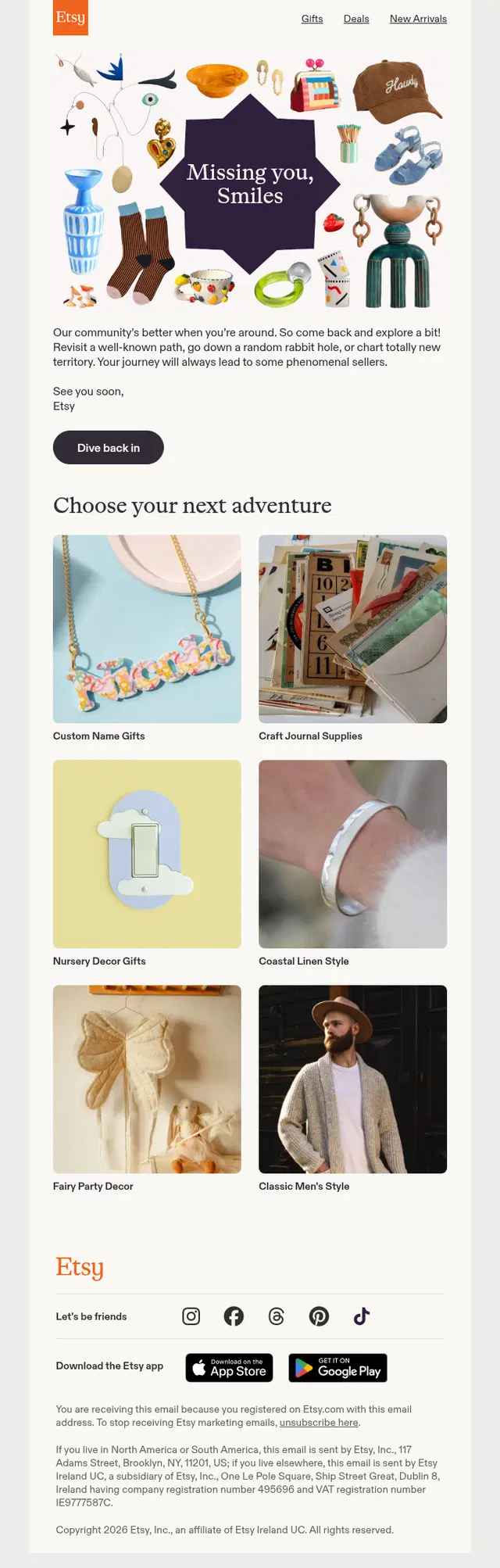
Win-back campaigns target customers whose buying or engagement activity has declined.
The key is defining inactivity based on the business. A weekly-purchase customer may be considered inactive after a few weeks. A customer who buys twice a year should not receive a “we miss you” email after 30 days.
8. Promotional and seasonal campaigns
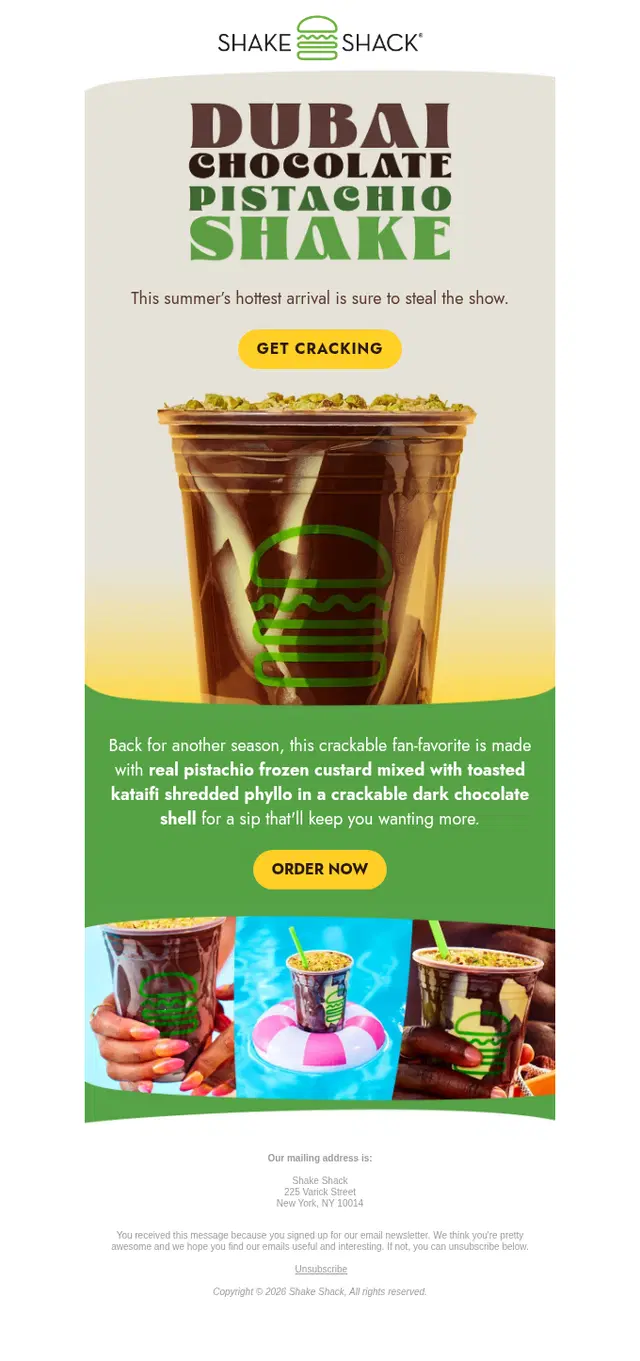
Promotional emails cover launches, sales, limited offers, seasonal events, new collections, and other planned moments.
Promotions still have an important place in ecommerce email marketing. The problem starts when every email feels like a promotion.
Your campaign calendar should leave room for education, product discovery, customer stories, useful content, loyalty, and post-purchase communication.
How to Build an Ecommerce Email Marketing Strategy
A strong ecommerce email marketing strategy starts with business goals and customer behavior, then turns those inputs into a connected lifecycle of campaigns and automated flows.
- Define the business outcome. Decide whether the priority is first purchase conversion, repeat purchase rate, average order value, customer lifetime value, retention, or another measurable outcome.
- Map the customer lifecycle. Identify the stages a customer moves through from subscriber to first purchase to repeat customer and, eventually, inactive customer.
- Audit what already exists. Review every campaign, automation, segment, trigger, suppression rule, and reporting dashboard before creating something new.
- Prioritize high-intent flows. Build the automated journeys closest to meaningful customer actions first.
- Create useful segments. Segment by behavior and business relevance rather than creating dozens of tiny groups.
- Build your campaign calendar. Make sure promotional campaigns support, rather than collide with, automated customer journeys.
- Define the measurement model. Decide which metrics indicate engagement, conversion, retention, and revenue before the campaign goes live.
Start with revenue goals, not email goals
“Increase email revenue” is directionally useful, but it is not specific enough to guide a mature ecommerce program.
A better strategy might target one of these outcomes:
- Increase repeat purchases from first-time customers.
- Increase the percentage of customers who place a second order.
- Increase revenue from high-value customer segments.
- Improve conversion from abandoned carts.
- Increase the number of customers who buy across multiple product categories.
Once the business objective is clear, your email strategy can determine which customer behavior needs to change.
Map the customer lifecycle before creating more emails
A simple ecommerce lifecycle might look like this:
- Visitor
- Subscriber
- First-time customer
- Repeat customer
- High-value customer
- Inactive customer
Each stage has different problems.
A subscriber needs a reason to buy. A first-time customer needs a reason to return. A repeat customer may need a reason to explore a new category. A high-value customer may respond better to exclusivity than another generic discount.
When the customer lifecycle becomes the organizing principle, the email calendar becomes much easier to manage.
7 Advanced Ecommerce Email Marketing Strategies

Established stores can get more from email by improving how they use customer behavior, automation, segmentation, and measurement rather than simply increasing send volume.
1. Segment by behavior and value
Demographic segmentation can be useful, but ecommerce behavior often tells you more about immediate buying intent.
Useful segments can include:
- First-time customers
- Repeat customers
- High-value customers
- Recent purchasers
- Customers who have not purchased recently
- Category-specific buyers
- Frequent browsers who have not purchased
- Customers with high email engagement but no recent order
The important question is not “What data can we collect?” It is “What decision will this segment help us make?”
A segment that never changes the message, timing, offer, or customer experience adds complexity without adding much value.
2. Personalize around relevance, not names
Adding a first name to an email is easy. Useful personalization is harder.
A more valuable form of personalization can involve products, categories, buying patterns, timing, or customer status.
For example, a beauty store might separate customers who repeatedly buy cleansers from customers who primarily buy makeup. A fashion store can distinguish recent purchasers from people who have only browsed. A furniture store can use product-category interest to guide follow-up emails.
Personalization should reduce decision effort for the shopper. If it does not make the message more relevant, it may not be worth adding.
3. Treat automated flows as the core of the program
Recent benchmark data points in the same direction. Klaviyo’s 2026 data across more than 183,000 customers found that flows generated nearly 41% of email revenue while accounting for 5.3% of sends. Klaviyo also reported a 5.58% average click rate for flows compared with 1.69% for campaigns. These figures vary by industry, audience, platform, and methodology, so they are benchmarks rather than guaranteed results. Klaviyo’s 2026 benchmark data
Omnisend’s separate 2026 study of U.S. ecommerce brands found that behavior-based automated emails generated 25% of email revenue from 1.7% of sends in its dataset.
For established stores, the takeaway is not “send more flows.” It is to identify the customer actions closest to purchase or retention and build useful automation around them.
4. Design post-purchase journeys around the second order
Many stores put most of their energy into the first sale.
That leaves an important opportunity after checkout.
For products with natural repeat-purchase behavior, the post-purchase journey should answer four questions:
- Did the customer receive and understand the product?
- Did they have a good experience using it?
- What else would help them get more value?
- When is there a logical reason to purchase again?
The answers determine the email sequence.
This can also improve the experience of the next purchase. A customer who receives useful product education may be more prepared to choose the right complementary product later.
5. Use discounts as a tool, not as the strategy
Discounting can increase short-term conversion, but it can also train customers to wait for promotions.
Before offering a discount, ask what is stopping the customer from purchasing.
They may need more product information. They may have questions about shipping. They may be unsure which option is right. They may simply need a reminder.
Use the message to address the likely barrier first. A discount is more useful when it solves a real price objection rather than becoming the default answer to every abandoned session.
6. Build a suppression and priority system
This is one of the most important differences between a basic email program and an established one.
Customers can qualify for several automated journeys at the same time. They can also qualify for a promotional campaign.
Without suppression rules, the customer can receive too many messages within a short period.
Your system should define rules such as:
- Stop cart recovery after a purchase.
- Exit a first-purchase sequence once the customer orders.
- Suppress promotional campaigns when a critical service or transactional message needs priority.
- Limit how many marketing emails a person can receive within a defined period.
- Exclude customers who recently received a similar offer.
The exact rules depend on the brand and platform, but the principle is simple: customer context should determine email priority.
7. Test the customer experience, not just the subject line
A/B testing is often reduced to subject lines and button colors.
Established teams can test much bigger decisions:
- Offer versus no offer
- One-email sequence versus three-email sequence
- Product recommendation model A versus model B
- Short copy versus detailed product education
- Earlier versus later replenishment timing
- Different segments receiving different offers
- Campaign frequency by customer engagement level
The best test is one that can change your future strategy, not just the current email.
How to Manage Ecommerce Email Automation at Scale
Scaling email automation means controlling the interactions between flows, campaigns, customer segments, and sending rules so the program remains useful as the database grows.
Audit your automation map
Create a simple inventory of every active automation.
| Automation | Trigger | Primary goal | Exit condition |
|---|---|---|---|
| Welcome | New subscriber | Build trust and encourage first purchase | Purchase or sequence completion |
| Cart recovery | Cart created without purchase | Recover high-intent shoppers | Purchase |
| Post-purchase | Order completed | Improve experience and create next purchase opportunity | Journey completion |
| Replenishment | Expected repurchase window | Drive repeat purchase | Reorder |
| Win-back | Customer inactivity | Reactivate customers | Purchase or re-engagement |
Once the map exists, look for conflicts.
Ask which automations can overlap, which ones should suppress others, and which customer events should immediately remove someone from a sequence.
Do not automate every possible behavior
More triggers do not automatically create a better customer experience.
An automation should exist because the customer event has a meaningful business or customer-service purpose.
If an event is too weak or noisy, the resulting emails may feel random. This is especially common with browse-based triggers on stores that have large product catalogs.
Start with the behaviors that have a clear relationship to purchase or retention. Add complexity when the data shows it is useful.
Review flows on a regular schedule
A flow that performed well last year may not be optimal today.
Products change. Customer behavior changes. Offer structures change. Website experiences change. Deliverability conditions change.
At minimum, review the performance of major flows by revenue contribution, conversion, unsubscribe behavior, and customer quality. Avoid judging a flow on opens alone.
How to Measure Ecommerce Email Marketing Performance
Effective measurement connects email activity to customer behavior and business outcomes rather than treating every click or attributed order as equal.
Track the metrics that answer business questions
| Metric | What it tells you | What to investigate |
|---|---|---|
| Click rate | Whether the email creates enough interest to generate a click. | Offer, creative, copy, CTA, relevance |
| Conversion rate | Whether clicks or sessions lead to purchases. | Landing page, offer, product fit, checkout friction |
| Revenue per recipient | How much revenue the average recipient generates from the send. | Audience quality, offer, product demand |
| Repeat purchase rate | Whether email is helping customers come back. | Post-purchase journey, replenishment, retention |
| Unsubscribe rate | Whether the program may be becoming less relevant to recipients. | Frequency, segmentation, content quality |
| Complaint rate | Whether recipients are reporting messages as spam. | Consent, frequency, relevance, list quality |
Do not confuse attributed revenue with incremental revenue
This is a critical point for experienced ecommerce marketers.
An email platform may attribute an order to an email because the customer clicked or because the customer purchased within a defined attribution window. That does not automatically prove the email created the entire purchase.
Listrak’s 2026 benchmark methodology, for example, uses a 30-day lookback window and explains that different vendors use different attribution approaches. Its report analyzed 130 billion email and SMS messages sent by more than 1,000 ecommerce clients during 2025. Triggered and transactional messages accounted for 49% of email revenue in that dataset. Listrak’s 2026 benchmark report
This is why mature teams should ask, “How much revenue was attributed?” and also, “How much additional revenue did the marketing program actually create?”
Look at performance by flow and customer segment
An overall email dashboard can hide important differences.
Marketing and customer data analytics can reveal which segments, campaigns, and customer journeys are actually driving results.
A campaign might perform poorly across the full list but work well with recent customers. A win-back campaign may have a low overall conversion rate but still be profitable for customers with high historical order values.
Review performance by:
- Campaign versus automation
- New versus repeat customers
- High-value versus standard customers
- Product category
- Engagement level
- Acquisition source, when reliable data is available
How to Improve Ecommerce Email Deliverability

Deliverability is a business requirement because a highly relevant email has little value if it consistently fails to reach the inbox.
For established ecommerce businesses, email deliverability deserves ongoing attention rather than a one-time setup task.
Authenticate your sending domain
Google’s current sender guidelines require senders to use email authentication, with bulk senders to personal Gmail accounts required to implement SPF, DKIM, and DMARC. Google also requires one-click unsubscribe for applicable marketing messages sent by bulk senders and recommends maintaining low spam complaint rates.
Google defines a bulk sender as a sender that sends about 5,000 or more messages to personal Gmail accounts within a 24-hour period. Once a domain is classified as a bulk sender, the status does not expire.
That makes authentication and sender reputation increasingly important for larger stores.
Keep your list healthy
A large list is not automatically a valuable list.
Remove or suppress contacts who are consistently disengaged when your sending and retention strategy indicates they are no longer useful prospects. Continuing to send every campaign to inactive contacts can create unnecessary volume and may increase the chance of complaints.
Make unsubscribing easy
An unsubscribe is not necessarily a failure. In many cases, it is a useful signal that the subscriber is no longer interested.
Making the process difficult can create a worse outcome if customers respond by marking messages as spam instead.
What U.S. Ecommerce Brands Need to Know About Email Compliance
U.S. commercial email must follow applicable requirements, including the CAN-SPAM Act, and brands should also account for platform rules and any additional laws that apply to their operations and customers.
The Federal Trade Commission states that commercial emails must not use deceptive header information or subject lines, must include a valid physical postal address, and must provide a way for recipients to opt out. Opt-out requests must be honored within 10 business days. FTC guidance on CAN-SPAM
Brands that work with an agency or another third party are not automatically relieved of responsibility. The FTC also notes that companies can remain responsible for the practices of businesses handling email marketing on their behalf.
Compliance is not a substitute for good marketing. It is part of the operating foundation that allows the marketing program to continue safely.
This section is general business information, not legal advice. Ecommerce brands with complex operations, multiple jurisdictions, or specialized data practices should consult qualified counsel about their specific obligations.
Common Ecommerce Email Marketing Mistakes to Avoid

Sending the same email to everyone
A broad campaign can be appropriate sometimes, but an established store should not depend on one audience segment for every message.
At minimum, consider recent customers, inactive customers, and people who have shown interest in the product category being promoted.
Overusing discounts
Discounts can become a crutch when the marketing team has no other way to create urgency or value.
Build campaigns around product education, new releases, exclusivity, useful content, customer stories, and relevant recommendations too.
Adding automations without reviewing the existing system
Every new flow can interact with an existing flow.
Before launching a new automation, ask what other messages that customer may receive before, during, and after the trigger.
Measuring opens as the main success metric
Open rates can provide directional information, but ecommerce teams should connect email activity to clicks, conversions, revenue, customer retention, and profitability.
Ignoring the post-purchase stage
The first purchase changes what the customer should receive next.
Continuing to treat a new customer like a prospect leaves useful retention opportunities untouched.
Sending more instead of improving relevance
When performance drops, increasing send volume is an easy response.
It is not always the right one.
Check audience quality, message relevance, product-market fit, creative, offer structure, frequency, and automation logic before deciding to send more emails.
Ecommerce Email Design Best Practices
Ecommerce emails should make it easy for the reader to understand the offer, decide whether it is relevant, and take the next step.
Keep the main action obvious
Most promotional emails should have one primary action. Secondary links can exist, but they should not compete with the main purpose of the message.
Design for mobile first
Use readable text, clear hierarchy, strong contrast, and buttons with enough space to tap comfortably. The product should remain understandable even when images do not load immediately.
Do not turn the entire email into one image
Image-heavy emails can create accessibility, rendering, loading, and comprehension problems. Important information should exist as live text wherever practical.
Match the landing page to the email
If the email promises a particular collection, offer, product, or benefit, the destination page should continue that same message.
A relevant email followed by a generic homepage creates unnecessary friction.
How to Build a Better Ecommerce Email Calendar
An ecommerce email calendar should coordinate planned campaigns with automated journeys instead of treating every send as an isolated event.
Start with the events that matter to the business.
- Product launches
- Inventory and restock events
- Seasonal promotions
- Major shopping periods
- Customer loyalty events
- Educational content
- Post-purchase and retention journeys
Then layer automated flows around customer behavior.
The campaign calendar tells you what the business wants to communicate. The automation system tells you what the customer is currently doing.
When those two systems are coordinated, the brand can stay timely without overwhelming subscribers.
Use frequency rules instead of guessing
There is no universal number of emails that every ecommerce store should send each week.
The right frequency depends on product category, buying cycle, audience expectations, promotional calendar, engagement, and customer lifecycle stage.
Instead of asking, “How many emails should we send?” ask, “How much communication can this customer receive before the experience becomes less useful?”
How AI Can Help With Ecommerce Email Marketing

AI can help ecommerce teams analyze customer data, generate variations, organize content, and speed up campaign production, but it should support marketing decisions rather than replace them.
Useful AI applications
- Generating subject-line and copy variations for testing
- Summarizing campaign performance
- Identifying potential customer segments
- Helping organize product information
- Creating first drafts of product-focused content
- Suggesting alternative offers for different audience groups
The highest-value use of AI may be reducing the manual work around analysis and production so marketers can spend more time deciding what customers actually need.
Where human judgment still matters
An AI system can generate ten subject lines quickly. It cannot automatically know whether a discount damages the brand’s positioning, whether a product claim is accurate, or whether a particular audience is ready for a promotion.
Those decisions still require business context.
A Practical Ecommerce Email Marketing Framework
The most useful way to think about an established ecommerce email program is as a five-stage system.
| Stage | Main question | Priority emails | Primary business goal |
|---|---|---|---|
| Acquire | How do we turn interested visitors into known subscribers? | Signup, welcome | Build a permission-based audience |
| Convert | How do we help interested shoppers buy? | Browse, cart, product education | Increase first purchases |
| Retain | How do we get customers to return? | Post-purchase, recommendations, replenishment | Increase repeat purchases |
| Optimize | What is working and what needs to change? | Tests, segmentation, reporting | Improve efficiency |
| Scale | How do we grow without damaging the customer experience? | Priority flows, suppression, deliverability | Protect long-term revenue |
This framework is useful because it stops the email program from becoming a collection of disconnected tactics.
A welcome flow belongs to acquisition and conversion. A cart flow supports conversion. A post-purchase journey supports retention. Segmentation and testing improve all of them. Deliverability and suppression protect the system as volume increases.
That is the difference between “sending emails” and operating an ecommerce email marketing program.
When Should You Outsource Ecommerce Email Marketing?
Outsourcing can make sense when the complexity of the email program begins to exceed what the internal team can manage consistently.
The warning sign is not necessarily list size. It is operational complexity.
You may need external support when your team is dealing with several customer segments, multiple automated journeys, regular campaigns, ongoing testing, design requirements, deliverability concerns, and revenue reporting at the same time.
Another sign is opportunity cost. If an internal marketing manager spends most of the week building emails and troubleshooting automation instead of working on merchandising, acquisition, customer experience, or broader strategy, outside support may be worth evaluating.
The right partner should understand ecommerce lifecycle marketing, segmentation, automation, reporting, creative execution, and email marketing services. An agency that only designs email templates may not be enough for a mature program.
Frequently Asked Questions
What is the best email marketing strategy for ecommerce?
The best strategy depends on the store’s products, buying cycle, customers, and business goals. For an established ecommerce brand, the strategy should usually combine lifecycle automation, behavioral segmentation, promotional campaigns, post-purchase communication, testing, and revenue-focused measurement.
How often should an ecommerce store send marketing emails?
There is no universal sending frequency that works for every ecommerce store. The right frequency depends on customer expectations, product category, buying cycle, engagement, promotional activity, and the number of automated messages a customer may already receive.
Which automated emails should an ecommerce store prioritize?
Most stores should start with high-intent and high-value customer journeys such as welcome, abandoned cart, post-purchase, replenishment where relevant, and win-back. Established stores can then add more advanced behavioral flows once the core system is performing reliably.
How can ecommerce email marketing increase repeat purchases?
Use post-purchase education, relevant recommendations, replenishment reminders, loyalty messaging, cross-sell campaigns, and win-back journeys. Timing should reflect the customer’s actual buying behavior rather than a generic schedule.
What metrics should ecommerce email marketers track?
Track metrics such as click rate, conversion rate, revenue per recipient, repeat purchase rate, unsubscribe rate, complaint rate, and customer value. Review these metrics by campaign, automation, and customer segment rather than relying only on a single account-level number.
Is email marketing still effective for established ecommerce brands?
Yes, but the value comes from relevance and customer context rather than simply increasing send volume. Recent 2026 research from Omnisend and Klaviyo shows that automated, behavior-based email can account for a disproportionate share of email revenue in their datasets, which supports prioritizing lifecycle automation and relevance.
How do I improve ecommerce email deliverability?
Use authenticated sending domains, maintain healthy lists, control complaint rates, make unsubscribing easy, send relevant content, and monitor mailbox-provider requirements. Larger senders should pay particular attention to SPF, DKIM, DMARC, one-click unsubscribe requirements, and Google Postmaster Tools.
Should ecommerce brands use email and SMS together?
Email and SMS can complement each other when each channel has a clear role. Email is useful for richer product stories, promotions, education, and lifecycle communication, while SMS can be useful for time-sensitive messages. The important part is coordinating the channels so customers do not receive repetitive or conflicting messages.
The Best Ecommerce Email Strategy Is a Connected One
The biggest mistake established ecommerce brands can make is treating email as a weekly promotional task.
A mature email program should behave more like a customer communication system.
It knows whether someone is a new subscriber, a first-time buyer, a repeat customer, a high-value customer, or an inactive customer. It responds to meaningful behavior. It knows when to send, when to wait, and when not to send. It connects promotional campaigns with automated journeys instead of allowing them to compete.
It also measures more than clicks. It looks at conversions, repeat purchases, customer value, deliverability, and the real business impact of the program.
That is where email marketing for ecommerce becomes more than another marketing channel. It becomes part of the way the business keeps customers, creates repeat demand, and gets more value from the traffic it already worked to acquire.
The strongest next step for an established store is usually not adding another email type. It is finding the weakest part of the existing lifecycle, fixing it, and then measuring what changed.